If you’ve ever watched a child narrate elaborate stories while playing with toys, you’ve witnessed language learning in action.
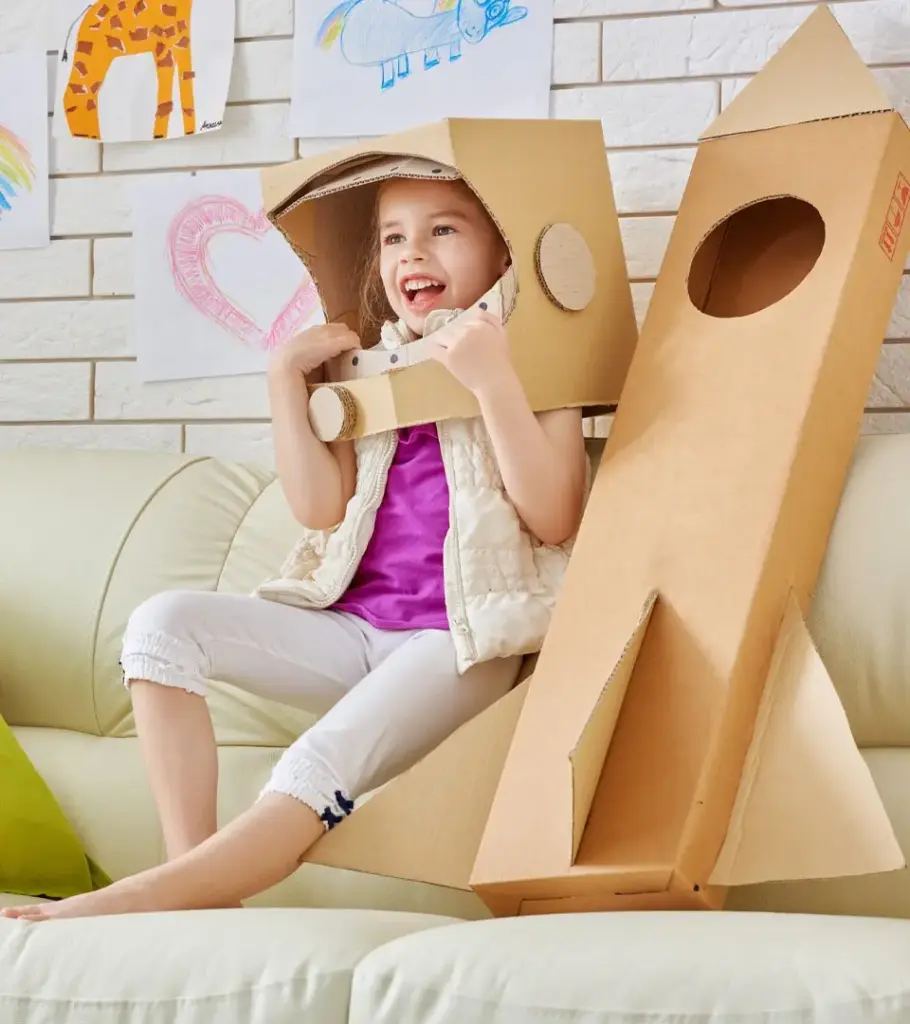
From role-playing a shopkeeper to pretending a cardboard box is a spaceship, play is far more than just fun – it’s one of the most effective ways young children learn to communicate.
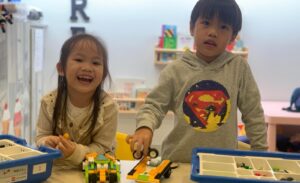
Play-based learning puts children at the centre of the learning experience. Instead of passively absorbing information, children actively explore ideas, experiment with language, and make sense of the world through interaction.
According to early childhood experts, play-based learning supports not only cognitive growth, but also language, social, and emotional development by providing meaningful, real-life contexts for communication.
When children play, they naturally use language to explain, question, or negotiate. They practise new vocabulary without fear of making mistakes and learn how words work in different situations, whether they’re giving instructions, expressing feelings, or telling others what comes next.
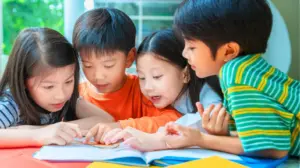
One of the most impactful forms of play-based learning is storytelling. Listening to stories, retelling them, or inventing new ones helps children understand how language is structured. They learn about sequencing, cause and effect, descriptive language, and character emotions.
Research shows that storytelling activities significantly enhance vocabulary development, narrative skills, and comprehension in young children, especially when the stories are interactive and paired with play.
Storytelling also strengthens expressive language. When children act out stories or take on different roles, they experiment with tone, volume, facial expressions, and body language. These are essential communication skills that go beyond words alone.
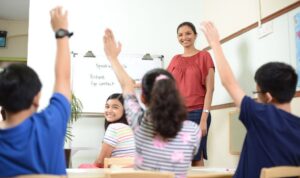
Through shared storytelling, children learn how to listen with understanding and how to speak to an audience – skills that form the foundation of confident communication later in life.
Why This Matters in the Singapore Context
In Singapore’s multilingual environment, children are often exposed to more than one language from a young age. Play-based learning and storytelling provide a natural bridge between languages, helping children make meaning without pressure.
Through stories, songs, role play, and guided play scenarios, children can build vocabulary, sentence structure, and expressive confidence in both English and their mother tongue.
This approach also aligns closely with Singapore’s early childhood philosophy, which emphasises holistic development and strong oral communication skills. In play-based storytelling environments, educators can intentionally model language, introduce new vocabulary, and encourage children to express their thoughts – while still keeping learning joyful and age-appropriate.
Ultimately, when play and storytelling come together, language learning is not just fun, but also purposeful and memorable.